If you are a seed-stage UK company with less than US $1.5M in funding and would like to join the ChipStart UK Incubator click on the button below.
If you are a startup company with more than US $1.5M of funding and are interested in learning more about the Silicon Catalyst Two-Year accelerator, click the button below.
SiliconCatalyst.UK is an affiliate of the parent company Silicon Catalyst is the only accelerator focused on the Global Semiconductor Industry including Chips, Chiplets, Materials, IP and Silicon fabrication-based Photonics, MEMS, Sensors, Life Science and Quantum.

ChipStart UK: Semiconductor Startups @ Cambridge - Investing in the Future
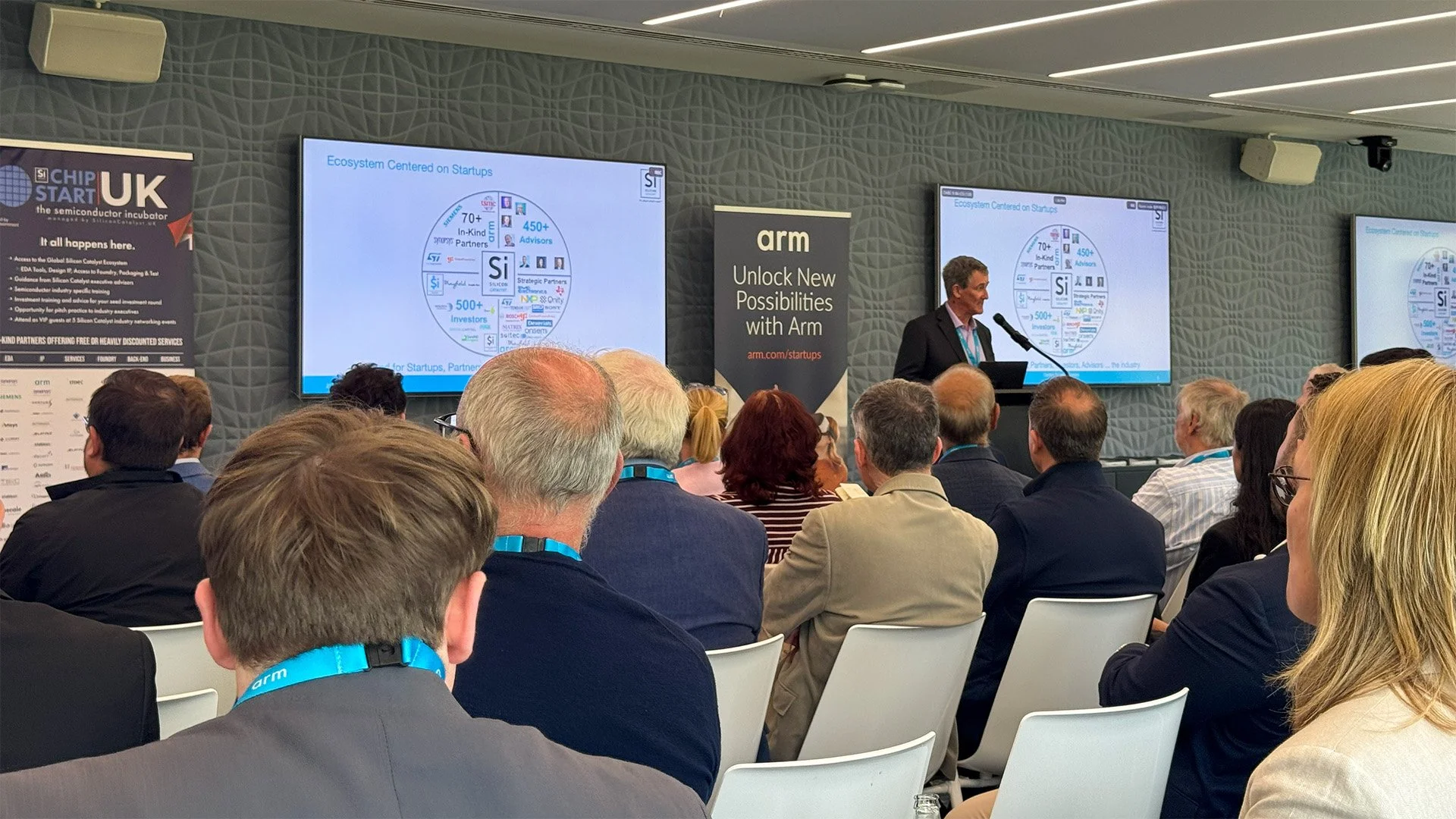
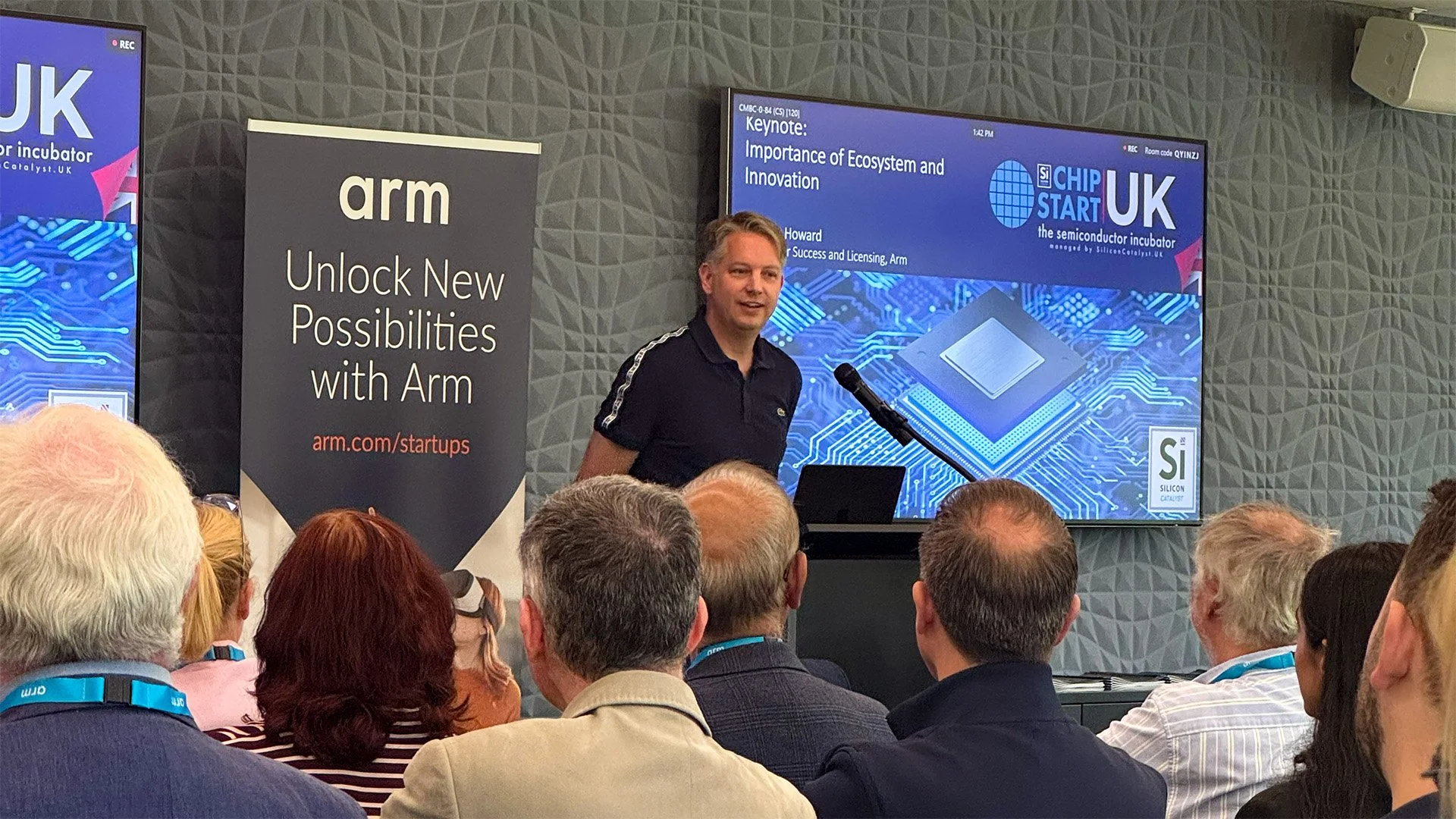
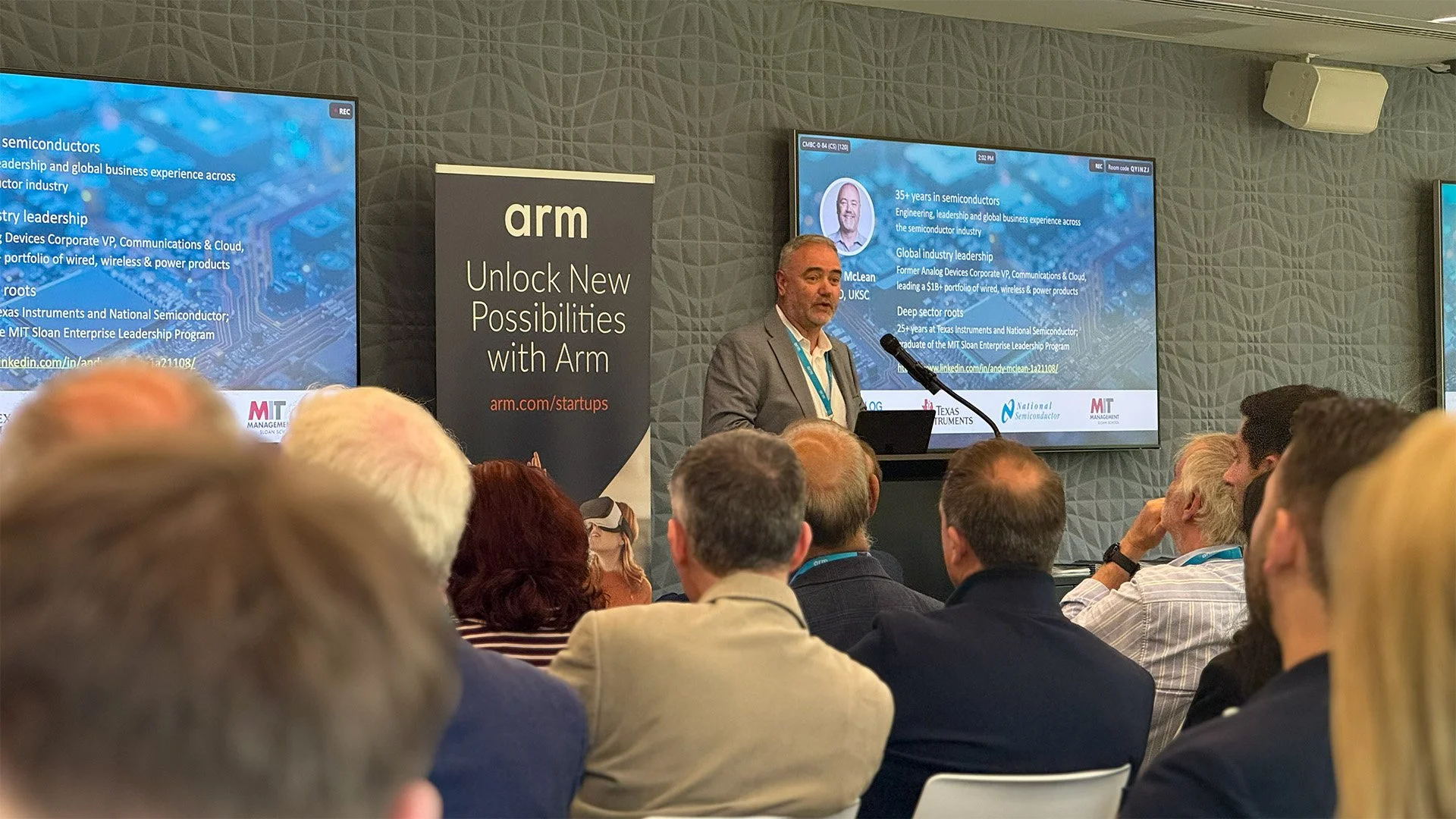
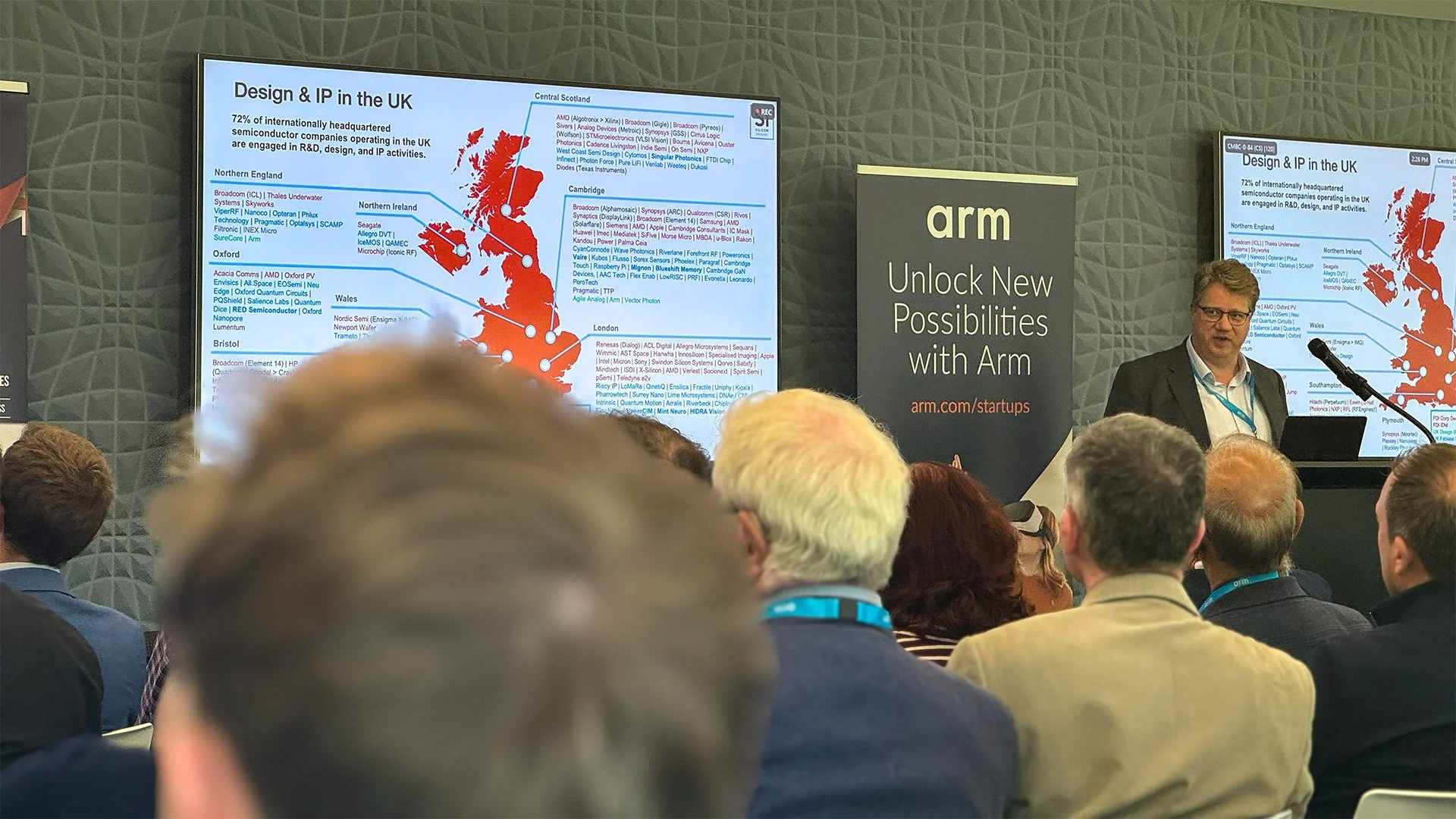


CAMBRIDGE, 12th June 2026 - Silicon Catalyst.UK continued its Forming, Storming, Norming and Performing series with “Investing in the Future”, bringing together semiconductor startups, industry leaders, investors and mentors for an afternoon of insight, pitches and conversation at Arm’s global headquarters in Cambridge.
As one of the world’s most influential semiconductor technology companies, Arm was a particularly fitting host. At the heart of a vast global technology ecosystem, Arm’s technology provides a foundation on which companies large and small can innovate and scale. Its presence in Cambridge also reflects the city’s remarkable contribution to the global semiconductor industry and the importance of collaboration between established technology leaders, emerging companies, investors and the wider ecosystem.
With Cambridge enjoying some welcome sunshine, the afternoon provided the perfect setting to explore a central question for the UK semiconductor community: how do we bring together innovation, investment and collaboration to build and scale the semiconductor companies of the future?
Glenn Charter, Senior Manager at Arm, and Sean Redmond, President of Silicon Catalyst Europe, opened the event, welcoming attendees and introducing the work of Arm and Silicon Catalyst.
Andrew Howard of Arm then kicked off the programme with an overview of Arm and its role in enabling a growing ecosystem of silicon innovators. He highlighted the importance of collaboration across the industry and the opportunity to build on the UK’s considerable strengths to reinforce its position within the global semiconductor landscape.
Next, Andy McLean, newly appointed CEO of the UK Semiconductor Centre, outlined the Centre’s role in supporting the UK’s semiconductor strategy. His keynote explored its initiatives and plans for strengthening the national ecosystem, connecting its participants and helping growing semiconductor companies overcome the challenges involved in scaling.
The two keynotes provided a fitting introduction to one of the highlights of the afternoon: the ChipStart UK startup pitches. Nine of the ten ChipStart UK cohort companies took to the stage for fast-paced five-minute, three-slide pitches: ABACQuS, Altro Photonics, Analogue Opto, Atlas Processing, Nibras Communications, Qascade, RobQuant, Skoosh and TrackStar. Unfortunately, Compound Hound was unable to join.
The pitches demonstrated not only the breadth of innovation emerging from the UK semiconductor community, but also the range of technologies and commercial opportunities being pursued by the latest ChipStart UK cohort.
Following a networking break, Giorgia Longobardi, Founder and CEO of Cambridge GaN Devices (CGD), shared the story of taking a deep-tech semiconductor company “from a PhD to Series C.” Drawing on her own entrepreneurial journey, Giorgia offered candid and valuable insights into the realities of commercialising semiconductor technology, raising investment and navigating the many challenges involved in scaling a deep-tech business.
The afternoon concluded with a lively investor panel exploring “Investing in Semiconductors.” Chaired by Martin O’Sullivan of the UK Semiconductor Centre, the panel brought together Anne Dobrée of Parkwalk Advisors, Robert Swann of Cambridge Angels and Ed Inns of Cambridge Innovation Capital.
The conversation explored the current investment environment for semiconductor startups, what investors look for when assessing opportunities, and some of the particular challenges deep-tech companies encounter when raising the capital needed to grow. It also provided a valuable opportunity to connect the perspectives of founders, investors and the wider semiconductor ecosystem.
And, with the Cambridge sunshine still holding, the conversations didn’t stop when the formal programme finished. Attendees headed to The Robin Hood for an informal close to the day, providing another opportunity for cohort companies, mentors, investors and industry colleagues to make connections and continue discussions sparked during the afternoon.
A huge thank you goes to Glenn Charter, Neil Parris and the wider Arm team for generously hosting us at Arm’s Cambridge headquarters, and to all of our speakers, panellists, cohort companies, mentors, investors and guests who contributed to the day.
Events like this demonstrate what Forming, Storming, Norming and Performing is all about: bringing the right people together, creating new connections and helping turn the UK’s semiconductor innovation into successful, scalable businesses.
Cohort #4: The Eleven Companies
Eleven companies were selected to join the programme, spanning quantum computing, photonics, AI processing, biosensing, satellite communications, and biotech manufacturing. Nearly half of the eleven companies are founded or co-founded by women.
Asentas Quantum Systems — Utilising atomically precise manufacturing to create a scalable, modular, quantum processor with all-to-all connectivity and full error correction in silicon, to provide the ultimate computation power.
Altro Photonics — Building an integrated photonic platform that combines best-in-class materials onto a single chip to cut power, complexity, and cost for AI data centre infrastructure, with a path into computing applications.
Analogue Opto — Developing integrated technologies that solve the memory scalability challenge in AI infrastructure. By combining high-speed mixed-signal electronics with advanced photonic integration, the company enables disaggregated, high-bandwidth memory architectures — the foundation for the next generation of agentic AI systems.
Atlas Processing — Building the infrastructure for AI at scale, combining memory and computation into a fabric that eliminates GPU idle time and enables AI systems to continuously share, reuse, and build upon knowledge at the speed and scale of modern AI, purpose-built for hyperscaler deployment.
Compound Hound — Developing a broad-spectrum, solid-state electronic nose that reads 280+ volatile compounds and distinguishes closely related compounds that portable alternatives struggle to tell apart, with an initial focus on food supply chain spoilage monitoring.
Nibras Communications — A UCL spin-out developing photonic chip-enabled, ultra-low-noise signal generators for satellite and 6G communications, covering 1–300 GHz from a single module, providing a solution enabling superior noise performance, faster and more resilient connectivity.
Orbicom — Developing a new class of qubits that removes a major obstacle to scalable quantum computing: the need for large magnetic fields and complex control hardware.
Qascade — Developing ultra-fast, energy-efficient photonic communication hardware based on advanced interconnect architectures. Its systems enable high-performance AI and datacom while accelerating emerging hybrid quantum-computing platforms.
RobQuant — Developing a solid-state quantum magnetometer for measuring the magnetic fields produced by neural activity, enabling next-generation magnetoencephalography (MEG). Its patent-pending technology enables high-sensitivity, room-temperature, on-chip brain monitoring without external magnetic shielding.
Skoosh — Building the measurement layer for the future of biomanufacturing, with proprietary sensing technology delivering rapid, quantitative insight into living cells at-line and ultimately in-line, enabling automated, closed-loop processes and scalable bio-derived products.
TrackStar — Building a chip-scale gaze-tracking module for smart glasses, delivering sub-degree accuracy with a fraction of the size, power and data volume of camera-based eye tracking, while integrating across a wide range of frame styles.
